Monday, 30 November 2009
Initial Soundtrack Ideas
We feel that to have a soundtrack to the background of our thriller opener would be a great effect which is used in nearly all successful thrillers. Having listened to a selection of songs and bounced different soundtrack ideas off of each other, we found that this song 'Club Foot' by Kasabian would be an ideal song for our opening, as it has the exact right feel about it and would fit perfectly into the opening shot when Joules is stepping off of the train and walking through the station. Our idea that the song would work well in a thriller is supported in the video itself when the time is at roughly 1:18, the makers of the video include a handgun, which is a generic signifier of the genre. Also at 2:04 you can see a briefcase being used, another signifier which we ourselves are using in our film.
Obviously, because of the ruling that we're not allowed to use copyrighted songs by signed artists in our videos, this particular song is not a possibility... But we may well look for other alternatives for a soundtrack by unsigned artists who might have a song giving a similar effect to this kasabian classic!

Costume
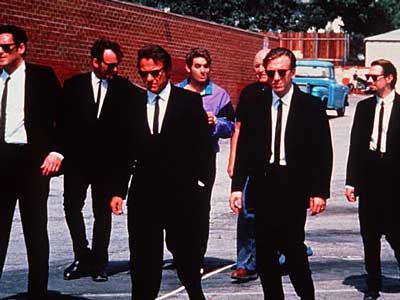
The costume that we intend to use for the characters in our film is a smart, formal dress... Yet we want it to appear in a modern way (for example suits, briefcases, overcoats and expensive jewellery in some cases). We decided on this as we feel this portrays our characters as being fairly 'well-off', high up in society and important.


We aim to make Joules appear as a businessman by having him dressed in a suit and tie whilst carrying the distinctive signifier that is the briefcase, to add to his cocky, confident character image.
Christian will also have a very similar dress, but also possibly some rings and a flashy watch to clearly establish his wealth and importance in his particular business, possibly a cigar on-the-go too could also give connotations of the kind of character we are trying to achieve!
For the female character, Isabella, we wanted to portray and give connotations of a rather femme fatale image for her character. We plan on doing this by dressing her in modern, sleek clothing such as a tight skirt, shirt, long winter jacket with a fur trim and also ankle boots to complete the image. Her costumes reflects her well off, high social status and also clearly shows off her personal importance to look good, and how much she values her looks.
. These would give connotations of her being, and make her seem as though, she is street-smart and dangerous. Make-up such as deep red lipstick is also vital in creating the right kind of image of a femme fatale, which will be used.
Our inspiration for this kind of costume in our film was from watching other well-known thriller films where we feel the costume has looked good and worked really well in creating the kind of image that fits the characters. Our costume can be linked back to initial films we looked at such as Pulp Fiction, Casino Royale and Reservoir Dogs. It is the kind of effect that the costume gave in these films, that we want to recreate with our characters in our own film! All of these films have male leads who are ingaged in criminal activites, are powerful, street wise, flashy and smartly dressed - they are in control, which is exactly what we aim to recreate!


We aim to make Joules appear as a businessman by having him dressed in a suit and tie whilst carrying the distinctive signifier that is the briefcase, to add to his cocky, confident character image.
Christian will also have a very similar dress, but also possibly some rings and a flashy watch to clearly establish his wealth and importance in his particular business, possibly a cigar on-the-go too could also give connotations of the kind of character we are trying to achieve!
For the female character, Isabella, we wanted to portray and give connotations of a rather femme fatale image for her character. We plan on doing this by dressing her in modern, sleek clothing such as a tight skirt, shirt, long winter jacket with a fur trim and also ankle boots to complete the image. Her costumes reflects her well off, high social status and also clearly shows off her personal importance to look good, and how much she values her looks.
. These would give connotations of her being, and make her seem as though, she is street-smart and dangerous. Make-up such as deep red lipstick is also vital in creating the right kind of image of a femme fatale, which will be used.
Our inspiration for this kind of costume in our film was from watching other well-known thriller films where we feel the costume has looked good and worked really well in creating the kind of image that fits the characters. Our costume can be linked back to initial films we looked at such as Pulp Fiction, Casino Royale and Reservoir Dogs. It is the kind of effect that the costume gave in these films, that we want to recreate with our characters in our own film! All of these films have male leads who are ingaged in criminal activites, are powerful, street wise, flashy and smartly dressed - they are in control, which is exactly what we aim to recreate!


Wednesday, 25 November 2009
Initial Narrative Planning of Thriller
Names
Man 1
Name: Joules
Role: Young, confident, cocky gang member with briefcase A
Age: mid-20's
Actor: James King
Joules has been sent by his 'boss' with the pay off money. His 'boss' is black mailing Christian with incriminating evidence he has of Christian from a past crime, from which he escaped the blame. Joules' boss is demanding a large sum of money for the evidence.
If the police got hold of the evidence Christian would be convicted of corruption and forgery. Hence Christians need for the documents to keep his name clear. Christian is paying out a lot for this evidence
Man 2
Name: Christian
Role: Older 'big-cheese' with breifcase B, father of Isabella
Age: mid-40's
Actor: Martin Lambert
Christian’s suitcase contains money which is exchanged for this evidence as a pay off. Joules has been sent by his 'boss' to give Christian the evidence. If Christian had not paid of the black mailing he would almost defiantly be sent to prison, as he is an ex-criminal with notorious involvement with criminal circles.
Woman
Name: Isabella
Role: Sleek, street-smart interceptor of breifcase B, daughter of Christian
Age: early 20's
Actress: Isobel Bailey
The interception by Isabella in the taking-back of the money, and murder of Joules. Isabella deceives her father and attempts to take off with the money Christian has just handed over to Joules. Isabella's intentions are to get away from her Father and the criminal world she lives in, without him finding out.
- Joules gets off train carrying briefcase A
- He walks through the station to station entrance and looks at watch
- Camera cuts to Christian in stationary car, who also looks at watch
- Isabella walks into shot in Christians car headlights (POV shot through windscreen) - close-up of Christian's eyes shows his confusion to her whereabouts (why is she there?) establishing her character as having some kind of relation with Christian
- Christian's phone rings, hearing 'i'm on my way etc.' and hangs up
- Christian gets out of his car
- Cuts back to Joules also hanging up, who continues walking out of station and through street
- Mid shot Joules framed in door way - framed in fate!
- Camera cuts to Joules arriving at meeting destination
- Joules sees Chris' shadow/hears footsteps approaching
- Switch of briefcases is made - handshake
- Chris walks off out of shot
- Joules looking smug, walks off round corner, followed by camera
- Isabella is seen lurking in the shadows
- Close up of boot only handle of knife is seen.
- reveals knife from her boot
- shot of Joules' shadow on wall with Isabella approaching behind and attacking with knife, falls to the ground
- Isabella retrieves briefcase B and walks off
- low angle shot of Isabella walking off with Joules' hand in the foreground - focus changing from Isabella to hand
- Close up of Christians hand hanging out of car window- watch further establishes link of relationship between Christian and Isabella.
- Outcome- Isabella murders Joules without the knowledge her father and takes the money with the intention of running away thus deceiving her father.
- Isabella walks away (note the close-ups of hands) a close-up of a hand on her shoulder creating suspense. Who's hand is it? A partner who she is also running away with? Her Dad?
Man 1
Name: Joules
Role: Young, confident, cocky gang member with briefcase A
Age: mid-20's
Actor: James King
Joules has been sent by his 'boss' with the pay off money. His 'boss' is black mailing Christian with incriminating evidence he has of Christian from a past crime, from which he escaped the blame. Joules' boss is demanding a large sum of money for the evidence.
If the police got hold of the evidence Christian would be convicted of corruption and forgery. Hence Christians need for the documents to keep his name clear. Christian is paying out a lot for this evidence
Man 2
Name: Christian
Role: Older 'big-cheese' with breifcase B, father of Isabella
Age: mid-40's
Actor: Martin Lambert
Christian’s suitcase contains money which is exchanged for this evidence as a pay off. Joules has been sent by his 'boss' to give Christian the evidence. If Christian had not paid of the black mailing he would almost defiantly be sent to prison, as he is an ex-criminal with notorious involvement with criminal circles.
Woman
Name: Isabella
Role: Sleek, street-smart interceptor of breifcase B, daughter of Christian
Age: early 20's
Actress: Isobel Bailey
The interception by Isabella in the taking-back of the money, and murder of Joules. Isabella deceives her father and attempts to take off with the money Christian has just handed over to Joules. Isabella's intentions are to get away from her Father and the criminal world she lives in, without him finding out.
- Joules gets off train carrying briefcase A
- He walks through the station to station entrance and looks at watch
- Camera cuts to Christian in stationary car, who also looks at watch
- Isabella walks into shot in Christians car headlights (POV shot through windscreen) - close-up of Christian's eyes shows his confusion to her whereabouts (why is she there?) establishing her character as having some kind of relation with Christian
- Christian's phone rings, hearing 'i'm on my way etc.' and hangs up
- Christian gets out of his car
- Cuts back to Joules also hanging up, who continues walking out of station and through street
- Mid shot Joules framed in door way - framed in fate!
- Camera cuts to Joules arriving at meeting destination
- Joules sees Chris' shadow/hears footsteps approaching
- Switch of briefcases is made - handshake
- Chris walks off out of shot
- Joules looking smug, walks off round corner, followed by camera
- Isabella is seen lurking in the shadows
- Close up of boot only handle of knife is seen.
- reveals knife from her boot
- shot of Joules' shadow on wall with Isabella approaching behind and attacking with knife, falls to the ground
- Isabella retrieves briefcase B and walks off
- low angle shot of Isabella walking off with Joules' hand in the foreground - focus changing from Isabella to hand
- Close up of Christians hand hanging out of car window- watch further establishes link of relationship between Christian and Isabella.
- Outcome- Isabella murders Joules without the knowledge her father and takes the money with the intention of running away thus deceiving her father.
- Isabella walks away (note the close-ups of hands) a close-up of a hand on her shoulder creating suspense. Who's hand is it? A partner who she is also running away with? Her Dad?
Wednesday, 18 November 2009
Thelma & Louise
Director: Ridley Scott
Writer: Callie Khouri
Released: 12 July 1991
Set in: Arkansas, redneck America
Car Park Scene – The murder of Harlem by Louise:
From inside the diner, the camera cuts outside to the car park where the lighting is much darker. The mise-en-scene is very dark and gloomy creating connotations of mystery and fear, because of the unknowingness of what could potentially be lurking within the shadows… Straight away from the beginning of this scene you can see a range of generic thriller signifiers, such as the very dark, mysterious mise-en-scene and deserted car park.
The camera at this stage uses a panning shot to establish the location (being the empty car park) showing numerous empty parked cars on camera. There is then continual usage of close-ups in order to emphasise the intensity of the crime being committed, and makes the audience themselves feel very nervous and vulnerable, having been put in the position of the characters as if they, the viewers, are in the film.
Props are used, such as the gun, because it again is a generic thriller signifier, but also as it shows the representation of gender. It is generally felt that the male is the more powerful of the two genders, but the power of the male is challenged in this scene as the female (Louise) is holding the gun in her hands up against the male, showing a sense of role reversal within the genders, as with the introduction of a weapon it makes her seem much more powerful in comparison to the male attacker. The introduction of this gun is very important in the action of this scene (where Louise forces the man to back down) because although she is far smaller in stature in comparison to the man, the gun makes her more powerful.
The costume also plays a vital part in the play-out of this scene. For example, Thelma’s costume (a frilly, white dress) is seen as a trap almost. Her white dress, high heels etc. makes her seem much more vulnerable as a typical female character in comparison to Louise, who is dressed in jeans and a jacket, which is seen to be far less feminine and less vulnerable.
It is very unusual for a woman to take control or have any kind of power in a classic thriller film. The duo learn that acting their usual feminine selves is getting them nowhere, so decide to take a very contrasting approach to their lives and take control (challenging gender stereotypes). Thelma and Louise are an extension of the usual femme-fatale character of a thriller film, who would generally connote very sleek and beautiful, yet always street-smart characteristics. Thelma and Louise meet these characteristics, and are represented as being deviant, manipulative and dangerous.
Writer: Callie Khouri
Released: 12 July 1991
Set in: Arkansas, redneck America
Car Park Scene – The murder of Harlem by Louise:
From inside the diner, the camera cuts outside to the car park where the lighting is much darker. The mise-en-scene is very dark and gloomy creating connotations of mystery and fear, because of the unknowingness of what could potentially be lurking within the shadows… Straight away from the beginning of this scene you can see a range of generic thriller signifiers, such as the very dark, mysterious mise-en-scene and deserted car park.
The camera at this stage uses a panning shot to establish the location (being the empty car park) showing numerous empty parked cars on camera. There is then continual usage of close-ups in order to emphasise the intensity of the crime being committed, and makes the audience themselves feel very nervous and vulnerable, having been put in the position of the characters as if they, the viewers, are in the film.
Props are used, such as the gun, because it again is a generic thriller signifier, but also as it shows the representation of gender. It is generally felt that the male is the more powerful of the two genders, but the power of the male is challenged in this scene as the female (Louise) is holding the gun in her hands up against the male, showing a sense of role reversal within the genders, as with the introduction of a weapon it makes her seem much more powerful in comparison to the male attacker. The introduction of this gun is very important in the action of this scene (where Louise forces the man to back down) because although she is far smaller in stature in comparison to the man, the gun makes her more powerful.
The costume also plays a vital part in the play-out of this scene. For example, Thelma’s costume (a frilly, white dress) is seen as a trap almost. Her white dress, high heels etc. makes her seem much more vulnerable as a typical female character in comparison to Louise, who is dressed in jeans and a jacket, which is seen to be far less feminine and less vulnerable.
It is very unusual for a woman to take control or have any kind of power in a classic thriller film. The duo learn that acting their usual feminine selves is getting them nowhere, so decide to take a very contrasting approach to their lives and take control (challenging gender stereotypes). Thelma and Louise are an extension of the usual femme-fatale character of a thriller film, who would generally connote very sleek and beautiful, yet always street-smart characteristics. Thelma and Louise meet these characteristics, and are represented as being deviant, manipulative and dangerous.
Essex Boys - Bars of light on windscreen
This is a close-up shot of Billy driving Jason (in the back seat). The expression on Billy's face is blank, almost as if he is not concentrating on the road but is deep in thought, possibly regretting having gotten involved with Jason, and realising what danger will inevitably be around the corner. Jason seen relaxing in background (though camera is focused on Billy) shows him as a very powerful, well-off character if he is able to demand somebody to drive for him.
The reflection of the light on the windscreen form the shapes of bars - suggesting that he is now trapped in this life of crime... Could also suggest where Billy is inevitably going to end up if he gets involved with Jason… Prison. Dark, noir lighting on the inside of the car is a typical signifier of thriller genre.

The reflection of the light on the windscreen form the shapes of bars - suggesting that he is now trapped in this life of crime... Could also suggest where Billy is inevitably going to end up if he gets involved with Jason… Prison. Dark, noir lighting on the inside of the car is a typical signifier of thriller genre.
Essex Boys
Director: Terry Winsor
Writers: Jeff Pope, Terry Winsor
Production Company: Granada Film Productions
Released: 14th July 2000
Audience: Most enjoyed by females aged 18-29 (possibly because female characters outwit male characters at the ending, promoting a positive female role-model).
Opening Scene:
The very first shot is generic of a thriller film, duly to the majority of the aspects of the mise-en-scene. For example, the first shot is in a garage, which is a very enclosed space, suggesting intimidation and vulnerability. The lighting in this shot is chiaroscuro lighting (meaning light on dark) as it is shot by a street light in the middle of the night; successfully creating a light on dark effect. This non-ambient lighting indicates a stylish interpretation of the events occurring. The garage is covered in cobwebs, which greatly increases the sense of fear within the mise-en-scene, connoting mystery, fright and danger within most viewers.
In terms of sound in this scene, ONLY diagetic sound is used. This sets an atmosphere of realistic or authentic tone, as you can hear the true events taking place as they are happening on screen. A voiceover (narration) is used to bring the audience into the story, as if they are part of the film themselves, because it seems as though he (Billy Reynolds) personally is telling the audience his story. Because of this initial narration, it establishes Billy as a protagonist within the first few minutes of the film. When narrating, he speaks with an Essex accent, quickly establishing the area in which he is from and the film is set. Still in the opening scene, there is a close-up on Jason, establishing him as the second character and another protagonist.
The opening scenes include lots of generic signifiers of thriller films. For example, the grey, miserable, unglamorous locations used for the setting of the film are notorious for thrillers, most likely because they create connotations of dankness, crime and sleaze. There is, in my personal opinion, a fantastic shot when Billy and Jason in the car are entering the Dartford tunnel at the start of the film, as it is as if they are entering a whole new realm or different section of the story. It is as if they are entering dangerous territory, because the shot of them entering the tunnel brings about connotations of the barrel of a gun… implying there is danger or crime soon to come. Another brilliant shot when they are in the tunnel is a close-up of Billy from the front, through the windscreen, when he is driving the car, where the lights from the roof of the tunnel are reflecting on the windscreen in a fashion so that it looks as though they are taking the shape of prison bars in front of Billy. This is possibly suggesting that now he has got involved with Jason’s life of crime, he is now trapped and stuck with this choice… it also again connotes claustrophobia (a signifier of thrillers, so once again establishing the film as a thriller) as if there is no escape from Jason, stuck in the car with him!It could easily also suggest where the character is inevitably going to end up if he gets involved with Jason… Prison.
Point of view shots are used in the car to position the audience in the characters’ shoes, making them engage, and almost placing the audience in the film. This for the viewers, creates a sense of nervousness and awareness because they are taking the place of Billy stuck in the car with this evil character, Jason, so making them pay more close attention. The white van they are driving in is also a generic signifier of thrillers, mainly because it really makes the audience ponder lots of different questions surrounding it’s contents… What could be in it? A body? Money? Drugs? It therefore helps keep the audience engaged by adding a sense of mystery.
When they reach their destination of the Essex marshes, you can see that the marshland suggests Jason’s society and way of life. It is a metaphor for him and his world, in the sense that the surroundings are nasty and dangerous, and the fact there is nothing there for miles and miles. Nothingness for as far as the eye can see. The marsh creates connotations of emptiness, loneliness and waste (possibly wasted dreams?). The weather is very dreary and overcast, and the scene uses purely ambient lighting, making the whole place seem miserable and grey… as this is yet another signifier of thriller films, because of it’s connotations of a life of crime.
Writers: Jeff Pope, Terry Winsor
Production Company: Granada Film Productions
Released: 14th July 2000
Audience: Most enjoyed by females aged 18-29 (possibly because female characters outwit male characters at the ending, promoting a positive female role-model).
Opening Scene:
The very first shot is generic of a thriller film, duly to the majority of the aspects of the mise-en-scene. For example, the first shot is in a garage, which is a very enclosed space, suggesting intimidation and vulnerability. The lighting in this shot is chiaroscuro lighting (meaning light on dark) as it is shot by a street light in the middle of the night; successfully creating a light on dark effect. This non-ambient lighting indicates a stylish interpretation of the events occurring. The garage is covered in cobwebs, which greatly increases the sense of fear within the mise-en-scene, connoting mystery, fright and danger within most viewers.
In terms of sound in this scene, ONLY diagetic sound is used. This sets an atmosphere of realistic or authentic tone, as you can hear the true events taking place as they are happening on screen. A voiceover (narration) is used to bring the audience into the story, as if they are part of the film themselves, because it seems as though he (Billy Reynolds) personally is telling the audience his story. Because of this initial narration, it establishes Billy as a protagonist within the first few minutes of the film. When narrating, he speaks with an Essex accent, quickly establishing the area in which he is from and the film is set. Still in the opening scene, there is a close-up on Jason, establishing him as the second character and another protagonist.
The opening scenes include lots of generic signifiers of thriller films. For example, the grey, miserable, unglamorous locations used for the setting of the film are notorious for thrillers, most likely because they create connotations of dankness, crime and sleaze. There is, in my personal opinion, a fantastic shot when Billy and Jason in the car are entering the Dartford tunnel at the start of the film, as it is as if they are entering a whole new realm or different section of the story. It is as if they are entering dangerous territory, because the shot of them entering the tunnel brings about connotations of the barrel of a gun… implying there is danger or crime soon to come. Another brilliant shot when they are in the tunnel is a close-up of Billy from the front, through the windscreen, when he is driving the car, where the lights from the roof of the tunnel are reflecting on the windscreen in a fashion so that it looks as though they are taking the shape of prison bars in front of Billy. This is possibly suggesting that now he has got involved with Jason’s life of crime, he is now trapped and stuck with this choice… it also again connotes claustrophobia (a signifier of thrillers, so once again establishing the film as a thriller) as if there is no escape from Jason, stuck in the car with him!It could easily also suggest where the character is inevitably going to end up if he gets involved with Jason… Prison.
Point of view shots are used in the car to position the audience in the characters’ shoes, making them engage, and almost placing the audience in the film. This for the viewers, creates a sense of nervousness and awareness because they are taking the place of Billy stuck in the car with this evil character, Jason, so making them pay more close attention. The white van they are driving in is also a generic signifier of thrillers, mainly because it really makes the audience ponder lots of different questions surrounding it’s contents… What could be in it? A body? Money? Drugs? It therefore helps keep the audience engaged by adding a sense of mystery.
When they reach their destination of the Essex marshes, you can see that the marshland suggests Jason’s society and way of life. It is a metaphor for him and his world, in the sense that the surroundings are nasty and dangerous, and the fact there is nothing there for miles and miles. Nothingness for as far as the eye can see. The marsh creates connotations of emptiness, loneliness and waste (possibly wasted dreams?). The weather is very dreary and overcast, and the scene uses purely ambient lighting, making the whole place seem miserable and grey… as this is yet another signifier of thriller films, because of it’s connotations of a life of crime.
Dominance
This shot is a complete contrast to the one of eve, previously posted. It is a Low-angle/Mid-shot of one of the gangsters. The use of low-angle shots in thrillers is of great importance - they are often used in shots of the villain to make them appear powerful, fearful, intimidating and in control of the situation. The expression on his face makes him appear extremely serious. His eyes are deadly focused on Eve, making him seem intimidating. The lighting around the characters face is of great significance when implying his role in the film. Dark lighting is used around his face, which makes him appear as a dark, evil figure - implying that he is most likely a villain. This kind of lighting is frequently used in thrillers to establish the villains.
In a sense, this is also an establishing shot - Once again, you can see the use of guns within the film - they are very well-known signifiers of the thriller genre, so this shot also clearly establishes the film as a thriller.

In a sense, this is also an establishing shot - Once again, you can see the use of guns within the film - they are very well-known signifiers of the thriller genre, so this shot also clearly establishes the film as a thriller.
Eve's Vulnerability
This shot is a mid-shot of Eve having just been slapped by one of the gangsters as she falls back onto the bed. The camera is used to suggest her vulnerability - is at a very slight high-angle, showing the vulnerability of Eve. Her body language also suggests great vulnerability - she is leaning backwards with her hand covering her face, probably in shock. This Vulnerability proves to be significant as it does, shortly after this shot, lead to her inevitable murder.

Eve's Murder
This shot is a mid-shot showing the 3 gangsters in the background, who have just killed Eve, of whom there is a close-up in the foreground. It is very much an establishing shot, showing that the film is a thriller.
There are lots of different aspects of the mise-en-scene of this shot which establish the film itself as a thriller. For example, One of the men is holding a gun having just used it to murder Eve - guns are heavily associated with thrillers, and are renowned signifiers of the genre. The fact that Eve has just been murdered also establishes it as part of the thriller genre - there has now definitely already been a murder this early on into the film, and murders are heavily linked to the genre. Other signifiers within this shot include the dress style of the 3 gangsters, which implies the thriller genre - trilby hats and long overcoats frequently worn by thriller characters.
Eve's face is out of focus, whereas the 3 men are in focus. Possibly implying that eve is now of less importance and fading out of the story, whereas the 3 men are taking up far more significant roles.

There are lots of different aspects of the mise-en-scene of this shot which establish the film itself as a thriller. For example, One of the men is holding a gun having just used it to murder Eve - guns are heavily associated with thrillers, and are renowned signifiers of the genre. The fact that Eve has just been murdered also establishes it as part of the thriller genre - there has now definitely already been a murder this early on into the film, and murders are heavily linked to the genre. Other signifiers within this shot include the dress style of the 3 gangsters, which implies the thriller genre - trilby hats and long overcoats frequently worn by thriller characters.
Eve's face is out of focus, whereas the 3 men are in focus. Possibly implying that eve is now of less importance and fading out of the story, whereas the 3 men are taking up far more significant roles.
Bulletholes
This is a high-angle shot of Eve revealing bullet holes in the mattress of Noodles' bed. This type of high-angle shot of eve and the bed greatly implies her vulnerability, making her seem weak and powerless.
The high quality and fancy design of the furniture imply that Noodles is fairly wealthy or 'well off'.
The actual bullet holes in the mattress imply that perhaps there has already been a murder, and therefore sets the initial scene for the rest of the film.
The lighting on Eve is very dark, she does not stand out - Possibly implies that she does not know anything about these bullet holes or who has put them there (as if she is 'in the dark' about the whole situation).

The high quality and fancy design of the furniture imply that Noodles is fairly wealthy or 'well off'.
The actual bullet holes in the mattress imply that perhaps there has already been a murder, and therefore sets the initial scene for the rest of the film.
The lighting on Eve is very dark, she does not stand out - Possibly implies that she does not know anything about these bullet holes or who has put them there (as if she is 'in the dark' about the whole situation).
Once Upon A Time In America - Lamp Shot
This shot is a close-up of Eve - close-ups such as these are often used to make the audience feel as though they are closer to and in the film. The extravagant clothing, jewellery and make-up implies that she is a 'femme fatale', an extremely significant role in a lot of thriller films. The lighting in this shot is very much focused on the face of Eve - the lamp is lighting up her face, as if to highlight her or make her stand out from the noir lighting of the mise-en-scene of the previous shot. As if she is being pointed out to predators...

Monday, 16 November 2009
Once Upon A Time In America
Director: Sergio Leone
Writer: Harry Grey
Opening Sequence
- First signifier - non-diagetic sound (not within the mise-en-scene). Music is 'God Bless America' - ironic as it's saying the opposite to what it actually means, suggesting that God does not bless America at all!
- Another non-diagetic sound - footsteps in the background. The footsteps suggest anxiety. Because you cannot see them, they make you feel anxious and fearful.
- Shadowed figure - close-up shot (establishing shot), suggests the thriller genre. Close-up of a shadowed female figure in a doorway > framing her as such, often implying that she is 'done for'!
- Noir lighting and chiaroscuro lighting (meaning light on dark effect) to suggest illusion or nightmare...
- The film contains a femme fatale, which can be a very important signifier of a thriller film
- Within just 2 minutes of film, the director has utilised signifiers extremely well and therefore set the scene for the rest of the film.
- Non-diagetic sound (music) playing in the background throughout the entire opening scene, ideal for creating specific moods within the opening.
- 'Crooked cop' - ALSO another signifier. Low-angle shot of the cop, makes him look superior and more powerful.
- Phone ringing on screen (so at first diagetic sound) then cuts to another scene with phone still ringing (non-diagetic). Phone ringing is used as a 'soundbridge' to transfer from one scene to another.
- Sepia lighting, used to make the atmosphere seem as if it is set in the past - to suggest a sense of change in time during a flashback.
- Lift shaft is used to signify chlostrephobia - very enclosed space.
Writer: Harry Grey
Opening Sequence
- First signifier - non-diagetic sound (not within the mise-en-scene). Music is 'God Bless America' - ironic as it's saying the opposite to what it actually means, suggesting that God does not bless America at all!
- Another non-diagetic sound - footsteps in the background. The footsteps suggest anxiety. Because you cannot see them, they make you feel anxious and fearful.
- Shadowed figure - close-up shot (establishing shot), suggests the thriller genre. Close-up of a shadowed female figure in a doorway > framing her as such, often implying that she is 'done for'!
- Noir lighting and chiaroscuro lighting (meaning light on dark effect) to suggest illusion or nightmare...
- The film contains a femme fatale, which can be a very important signifier of a thriller film
- Within just 2 minutes of film, the director has utilised signifiers extremely well and therefore set the scene for the rest of the film.
- Non-diagetic sound (music) playing in the background throughout the entire opening scene, ideal for creating specific moods within the opening.
- 'Crooked cop' - ALSO another signifier. Low-angle shot of the cop, makes him look superior and more powerful.
- Phone ringing on screen (so at first diagetic sound) then cuts to another scene with phone still ringing (non-diagetic). Phone ringing is used as a 'soundbridge' to transfer from one scene to another.
- Sepia lighting, used to make the atmosphere seem as if it is set in the past - to suggest a sense of change in time during a flashback.
- Lift shaft is used to signify chlostrephobia - very enclosed space.
Sunday, 15 November 2009
Research Conclusion
In conclusion, I feel that overall the results gathered from our research have indicated my expectations were generally correct, and that the place in which people of a teenage or young adult age choose to view their films, does in fact affect the places in which these people decide to eat. I think this is due mainly to the costs of the facilities in relation to the financial positions of the people asked! For example, the bar chart of the results for ‘where British audiences consume films’ clearly shows that, of the people who chose to hire a DVD to watch at home, the majority said they would just buy supermarket snacks (most likely because they have a lack of funds available to spend on going out, or because of the convenience of enjoying a night in). Very few from this category actually choose to eat from a restaurant (only 1 – McDonalds). In contrast, those who chose to visit the more expensive Odeon cinema, did in fact choose to eat out in more restaurants on average in comparison to the other 3 film-viewing options. To support this, you can see that this Odeon-viewing category contained the only person who said they would visit Frankie & Bennie’s (the most expensive of the options given) as an eatery. This result would indicate that this person is quite financially stable and can afford to splash out on a night out! So overall, there may not have been a completely clear, directly positive correlation between the places people view film and the places they choose to eat, but from looking at the results I think it is fairly safe to say that there is definitely some relation between them, and the cinema people choose does affect their choice of eatery. It appears that people with less money available tend to choose the cheaper options, whereas those with more money available will choose the more expensive ones.
From these results I have also discovered that the large majority of the people asked find out about new films of their interest coming out by television adverts. This is not a surprise due to the amount of television that is watched by teenagers! The least popular forms of finding out about them, was by internet pop-ups and phoning the box office. This neither is a surprise as most pop-ups are generally ignored by the majority of people, and the use of phones for researching about films directly has subsided due to the mass popularity of the internet.
From these results I have also discovered that the large majority of the people asked find out about new films of their interest coming out by television adverts. This is not a surprise due to the amount of television that is watched by teenagers! The least popular forms of finding out about them, was by internet pop-ups and phoning the box office. This neither is a surprise as most pop-ups are generally ignored by the majority of people, and the use of phones for researching about films directly has subsided due to the mass popularity of the internet.
Saturday, 14 November 2009
Results and graph for initial research into the habits of British film audiences: 'How films are marketed to the British audience'
The results and graph of the second section of my questionnaire, on 'How films are marketed to the British audience'

Graphs for results of initial research into the habits of British film audiences 'Where British audiences consume film'
Graphs for my results of initial research into the habits of British film audiences (Where British audiences consume film)

Results for initial research into the habits of British film audiences: ' Where British audiences consume film'
The results from my initial research into the habits of British film audiences questionnaire!

Questionnaire! - Initial research into the habits of British film audiences

Questionnaire! - Initial research into the habits of British film audiences
Originally uploaded by cnsmedia_benlambert
Friday, 13 November 2009
Initial Research into the habits of British Film Audiences
For my report, I will construct a questionnaire with the aim of comparing and testing if there is any relationship between the cinema people choose to visit on a night out, and the places in which they choose to eat (assuming they are going out for a night with the intention of eating, going to the cinema, or both), taking mainly into account the costs of each. I will give out the questionnaire to 16 different people of our target audience (teenagers/young adults of the ages around 16-19), and then for a set of quantitative results we will chart the data, and then comment on our results compared to what we expected to find for the qualitative aspect. This will cover the sector of the investigation ‘where British audiences consume film’.
These will be the options for film viewing and eateries. They are listed from least expensive to most expensive, as for example a visit to cinema city is going to be relatively cheap in comparison to a premiere seat at Odeon, because of a number of reasons (quality of seats, screen size, location, or films on offer).
Hire DVD for home/friends
Cinema City
Vue
Odeon Premiere Seats
Supermarket snack
McDonalds
Pizza Hut
Frankie & Benny’s 3-course meal
For the section on ‘how films are marketed to the British audience’ I will produce a second section of questions on the same questionnaire, asking about where my target audience generally hear about or see new films of their interest. I will then graph these results.
Expectations
From this research I expect to find that the cinemas people plan to visit will in fact affect the places in which they buy their food. For example, I expect there to be 2 different distinct things happen: people whom watch at the Odeon will most likely either eat at Frankie & Benny’s because they could be more well-off and be able to afford both of the more expensive options, or what could also happen is you can get people who are most passionate about film rather than eating, who will chose to view at the Odeon, but not have enough money to eat a proper meal out so choose the cheaper option of buying a supermarket snack. Also, I would imagine that people who plan on hiring out a DVD to watch at home, will most likely just buy supermarket snacks as they would be more convenient to eat at home.
These will be the options for film viewing and eateries. They are listed from least expensive to most expensive, as for example a visit to cinema city is going to be relatively cheap in comparison to a premiere seat at Odeon, because of a number of reasons (quality of seats, screen size, location, or films on offer).
Hire DVD for home/friends
Cinema City
Vue
Odeon Premiere Seats
Supermarket snack
McDonalds
Pizza Hut
Frankie & Benny’s 3-course meal
For the section on ‘how films are marketed to the British audience’ I will produce a second section of questions on the same questionnaire, asking about where my target audience generally hear about or see new films of their interest. I will then graph these results.
Expectations
From this research I expect to find that the cinemas people plan to visit will in fact affect the places in which they buy their food. For example, I expect there to be 2 different distinct things happen: people whom watch at the Odeon will most likely either eat at Frankie & Benny’s because they could be more well-off and be able to afford both of the more expensive options, or what could also happen is you can get people who are most passionate about film rather than eating, who will chose to view at the Odeon, but not have enough money to eat a proper meal out so choose the cheaper option of buying a supermarket snack. Also, I would imagine that people who plan on hiring out a DVD to watch at home, will most likely just buy supermarket snacks as they would be more convenient to eat at home.
Subscribe to:
Posts (Atom)
